
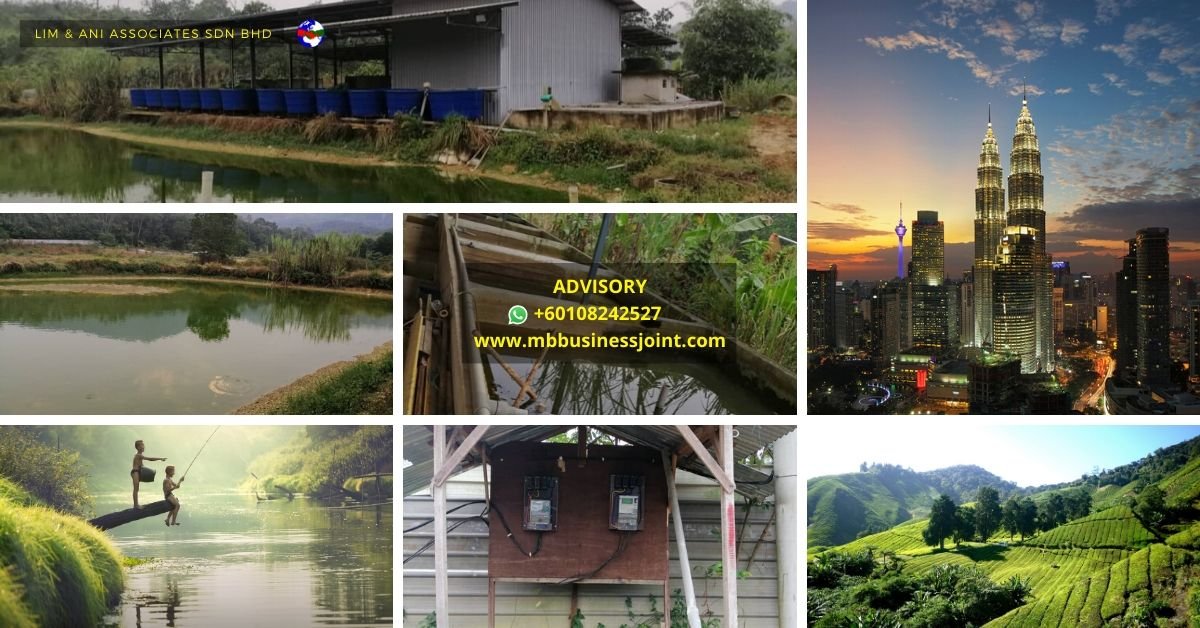
Agriculture Business in Malaysia: Company Setup & Investment Guide
Malaysia offers agriculture and agri-business opportunities across crop farming, aquaculture, livestock, food processing, agricultural technology, distribution and related value-added activities.
The right setup depends on the actual activity, land arrangement, ownership, licensing, operating model and whether the business involves primary agriculture, food processing, import-export or a combination of these.
What Is an Agriculture Business in Malaysia?
Agriculture business can cover much more than conventional farming. Depending on the commercial model, it may include cultivation, livestock, aquaculture, agricultural technology, food production, processing, distribution and export-oriented activities.
For investors, the first step is to define exactly which part of the agriculture value chain the Malaysian company will operate in.
A crop farm, fish farm, livestock business, food processor and agricultural trading company can require very different land, operational and regulatory arrangements.
Agriculture & Agri-Business Opportunities in Malaysia
Crop Farming
Crop farming can involve food crops, commercial crops, herbs, fruits, vegetables or other agricultural produce depending on land suitability, climate, infrastructure and market demand.
The commercial model should be assessed together with irrigation, labour, storage, logistics, customer demand and the intended route to market.
Fruit & Vegetable Production
Fresh-produce businesses can serve domestic retail, hospitality, wholesale, food-service and export customers.
Investors should examine crop selection, production cycle, perishability, distribution, cold-chain requirements and buyer access before deciding on the scale of the project.
Aquaculture & Fisheries
Aquaculture can include freshwater and marine fish, prawns, shellfish and other commercial species depending on the site and intended business model.
Location & Water
Assess water quality, environmental suitability, access and the infrastructure required by the production method.
Production System
Plan stocking, feed, health management, harvesting and processing requirements.
Customers
Identify wholesalers, restaurants, retailers, exporters or processors before scaling production.
Approvals
Identify the relevant fisheries, site and operating requirements for the proposed aquaculture project.
Livestock & Dairy Business
Livestock projects can involve poultry, cattle, goats, dairy and related production, depending on the investor’s capability and operating model.
A livestock project should be planned around land, feed, animal health, waste management, facilities, labour, logistics and the intended customer market.
Agri-Tech & Technology-Enabled Farming
Agriculture increasingly combines traditional production with technology, automation, data and controlled-environment systems.
Technology can improve efficiency, but it should solve a genuine production or operating problem rather than simply add unnecessary capital cost.
Can Foreigners Start an Agriculture Business in Malaysia?
Foreign investors can consider agriculture and agri-business projects in Malaysia, but the correct structure depends on the specific activity, land arrangement, ownership model and approvals applicable to the project.
Foreign participation should therefore be checked at the activity and project level rather than assuming that one ownership rule applies to every agriculture business.
A foreign-owned Malaysian company and the right to own, lease or use a particular agricultural property are separate matters and should be assessed independently.
Using a Malaysian Sdn. Bhd. for Agriculture Business
A Malaysian private limited company can provide the corporate foundation for an agriculture or agri-business operation.
Shareholders
Determine who will own the business and the agreed ownership structure.
Directors
Establish the board and management structure appropriate for the project.
Business Scope
Register business activities that properly reflect the agriculture, processing, trading or service model.
Funding
Plan capital according to land, equipment, licensing and operating requirements.
Banking
Prepare the corporate banking file around the actual commercial project.
Licensing
Identify the approvals applicable to the specific activity and location.
Land Is One of the Most Important Parts of the Agriculture Project
Agriculture depends heavily on location, land use, access, infrastructure and the commercial suitability of the site.
Land matters in Malaysia can involve state-level requirements, so the project should be assessed against the actual state and land arrangement rather than using a single nationwide assumption.
- Land category and permitted use
- Ownership or lease structure
- Foreign interest where applicable
- State authority requirements
- Access and utilities
- Water availability
- Environmental suitability
- Operating infrastructure
Owning Agricultural Land vs Leasing Agricultural Land
Own the Land
Land ownership may provide greater long-term control, but acquisition requirements and foreign-interest rules must be checked for the actual property.
Lease the Land
A long-term lease can reduce initial capital requirements and may suit projects where the investor wants to focus capital on operations and equipment.
The correct model should be chosen only after the site’s commercial, legal and regulatory position has been reviewed.
What Licences Does an Agriculture Business Need?
There is no single licence called an “agriculture business licence” that covers every project.
The required approvals depend on the activity, location, land, products, processing method and whether the company deals in farming, livestock, fisheries, food processing, trading or another regulated activity.
The company should identify the relevant federal, state, local and sector authorities before major capital is committed.
Agriculture + Food Processing
Many agriculture projects become more commercially valuable when the business moves beyond raw production into processing, packaging or value-added products.
Food-processing activities can involve different manufacturing, premises, food-safety and product requirements compared with ordinary farming.
Value Addition
Convert raw agricultural output into packaged or processed products.
Retail & Export
Processed products can create wider domestic and international market opportunities.
Manufacturing Requirements
Where the operation qualifies as manufacturing, separate licensing and approval considerations may apply.
When an Agriculture Project Becomes a Manufacturing Business
A farming company that starts processing agricultural products at commercial scale may move into a different regulatory environment.
MIDA currently states that manufacturing companies meeting the prescribed Industrial Co-ordination Act thresholds are required to apply for a manufacturing licence.
Manufacturing companies with shareholders’ funds of RM2.5 million and above, or 75 or more full-time paid employees, fall within the current manufacturing licence threshold published by MIDA.
Import & Export of Agricultural Products
Agriculture businesses may also import seeds, feed, machinery, raw materials or agricultural products, or export Malaysian produce and processed goods.
The company should assess the actual product because agricultural goods can involve customs, quarantine, health, veterinary, phytosanitary, labelling or other product-specific requirements.
A company trading fruit will face different requirements from one importing animal feed, livestock or agricultural chemicals.
Who Will Buy the Agricultural Output?
Production planning should begin with the customer. An agriculture project can fail commercially even with good production if the business has no reliable route to market.
Distributors
Supply produce or products through wholesale and distribution channels.
Consumer Market
Sell through retail, supermarkets, e-commerce or direct-to-consumer channels.
Hotels & Restaurants
Develop supply relationships with hospitality and food-service buyers.
Processors
Supply raw agricultural material to manufacturers and food processors.
International Buyers
Develop export markets where the product and supply chain support it.
Offtake Arrangements
Where commercially suitable, build predictable demand through structured buyer arrangements.
How Much Capital Does an Agriculture Business Need?
There is no one universal amount. Capital depends on the type of agriculture project and the scale of the operation.
Land
Purchase price, lease, deposits, land preparation and infrastructure.
Equipment
Machinery, irrigation, storage, processing or production systems.
Working Capital
Labour, feed, seed, fertiliser, utilities, logistics and operating costs.
Production Cycle
Agriculture may require funding before the first crop, harvest or sale.
Compliance
Budget for licences, technical assessments and operating requirements.
Contingency
Plan for weather, disease, price movement and operating disruption.
Agriculture Is a Business — Not Only a Farming Project
The quality of the crop or livestock is important, but commercial success also depends on customers, pricing, production cost, logistics and management.
- Market demand
- Production yield
- Weather and environmental exposure
- Input costs
- Labour availability
- Disease and biological risk
- Price volatility
- Storage and logistics
- Customer concentration
- Working-capital requirements
Banking for an Agriculture Company
Corporate banking should be prepared around the actual agriculture business rather than presenting the company as a generic Sdn. Bhd.
Business Model
Explain what the company grows, produces, processes or trades.
Land & Operations
Prepare information about the project’s operating location and infrastructure.
Source of Funds
Document the investment and source of capital appropriately.
Customers & Suppliers
Provide commercial information supporting the intended transaction profile.
Working & Living in Malaysia Through the Agriculture Business
Company ownership and immigration status are separate matters. Foreign founders intending to work in the Malaysian agriculture business should plan any expatriate pathway together with the corporate and operational structure.
The business activity, paid-up capital, premises, staffing and relevant approvals can become important when planning ESD or other immigration-related stages.
How to Start an Agriculture Business in Malaysia
Define exactly what the project will grow, raise, process, trade or provide.
Identify customers, demand, competitors and the expected route to market.
Review location, permitted use, utilities, access and operational suitability.
Identify the relevant federal, state, local and sector requirements.
Determine shareholders, directors, business activities and capital structure.
Proceed with the Malaysian corporate, tax and administrative foundation.
Build the financial structure around the genuine agriculture project.
Complete relevant approvals, equipment, staffing and operating infrastructure.
Organise suppliers, logistics, storage, buyers and distribution channels.
Begin production and expand only after commercial demand and operational capacity are validated.
Mistakes Agriculture Investors Should Avoid
Buying Land First
Do not commit to land before checking use, location and regulatory suitability.
No Buyer Strategy
Production without a route to market creates inventory and cash-flow risk.
Underestimating Working Capital
Agriculture often requires funding throughout the production cycle before revenue arrives.
Ignoring Licensing
The appropriate approvals should be mapped before equipment or stock is acquired.
Scaling Too Quickly
Expand after the commercial and operational model has been validated.
Mixing Farming and Processing
Treat farming, food processing and trading as distinct regulatory and operational layers.
Agriculture Business Setup & Investment Advisory
We help investors connect the agriculture business idea with the Malaysian company, land, licensing, banking and operational roadmap required to establish the project.
Continue Your Agriculture & Investment Research
Invest in Malaysia
Understand the broader investment and market-entry environment.
Malaysia Investment Guide →Business Ideas in Malaysia
Explore other Malaysian business and investment opportunities.
Business Ideas Guide →Business Licence Malaysia
Understand how licensing depends on activity, location and sector.
Licensing Guide →Import Export Business
Understand Malaysian trading, customs and product planning.
Import Export Guide →Open a Business as a Foreigner
Understand the company and operational pathway for foreign founders.
Foreign Founder Guide →Business Development in Malaysia
Build the commercial route from market entry to customers and growth.
Business Development Guide →Planning an Agriculture or Agri-Business Project in Malaysia?
Tell us what you intend to farm, produce, process or trade, your approximate investment range, whether land has already been identified and whether the shareholders are Malaysian or foreign. We can help structure the company, land, licensing, banking and operational pathway before major capital is committed.