
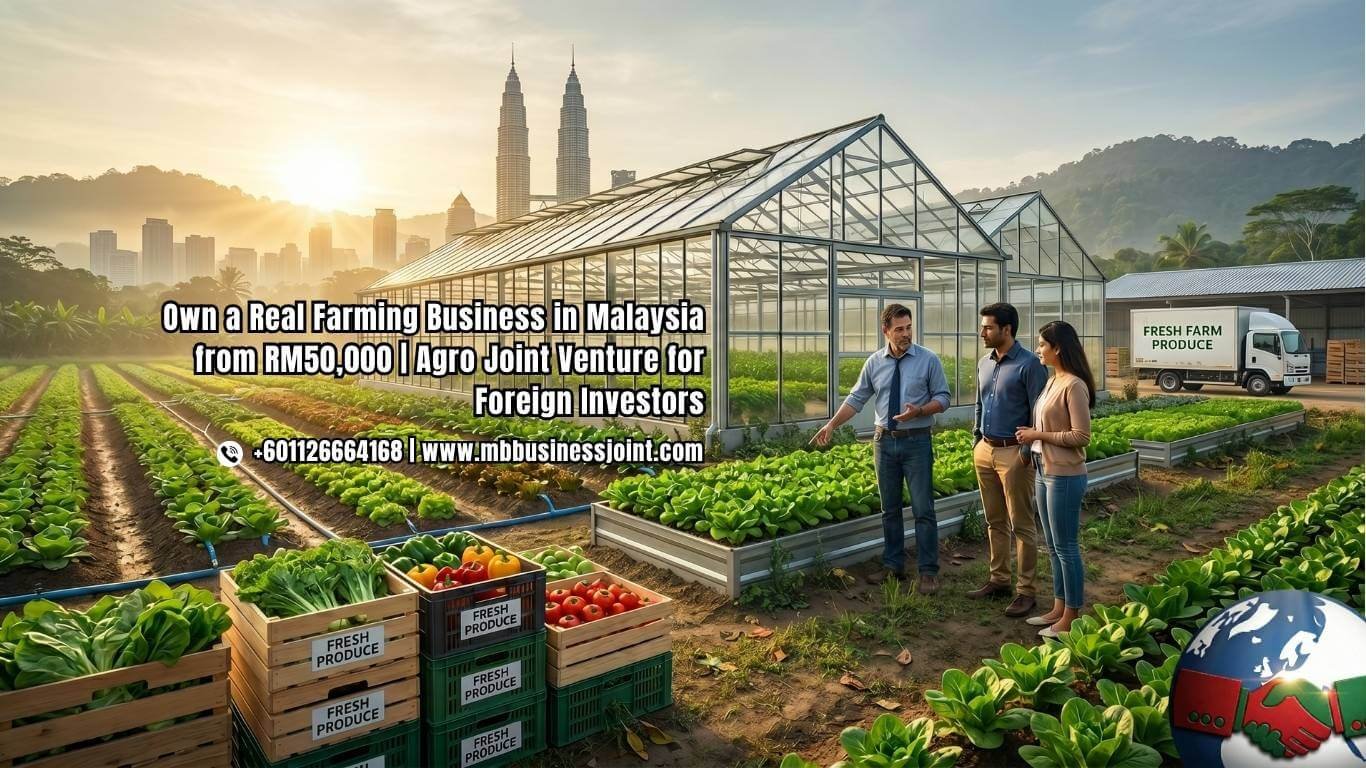
From Farmland Assessment to a Commercial Malaysian Agriculture Operation
A compliance-first guide for foreign investors planning crop production, livestock, aquaculture, food processing or agricultural trading in Malaysia.
A farming company needs land, production capability and a route to market
Foreign investors can establish Malaysian companies for suitable agricultural activities. However, incorporating a company does not automatically provide agricultural land, farming permission, government incentives, workers, bank financing or guaranteed buyers.
A viable farming project begins with the intended product, location, land-use position, production system, water supply, technical management, licensing exposure and sales channel. These matters should be reviewed before the investor signs a long lease or purchases equipment.
Crop farming, livestock, aquaculture, food processing and agricultural trading involve different regulators and operating risks. The company structure must therefore follow the selected agricultural model rather than using one broad description for every activity.
Yield, mortality, disease, weather, labour, logistics and market prices can materially affect results. Returns and government support cannot be guaranteed.
Select the agricultural activity before establishing the structure
Crop production
Vegetables, fruits, herbs, grains, ornamental plants or controlled-environment production using open-field, greenhouse, fertigation or hydroponic systems.
- Soil and water suitability
- Seed and planting-material control
- Pesticide and fertiliser management
- Harvest, grading and cold-chain planning
Livestock and poultry
Cattle, goats, sheep, poultry or other animal production requiring veterinary, biosecurity, waste-management and animal-welfare planning.
- Veterinary and animal-health controls
- Farm design and waste management
- Feed supply and mortality controls
- Animal-welfare responsibilities
Aquaculture
Freshwater, marine, hatchery or controlled aquaculture projects involving species selection, water quality, disease management and harvesting.
- Site and water-source suitability
- Species and stocking controls
- Water-discharge management
- Fish-health and harvest planning
Food processing
Cleaning, grading, packing, freezing, drying, manufacturing or transforming farm outputs into value-added food products.
- Food-premises compliance
- Manufacturing and hygiene controls
- Product labelling requirements
- Cold-chain and traceability systems
Agricultural trading
Purchasing, aggregating, importing, exporting or distributing agricultural inputs, fresh produce or processed agricultural goods.
- Wholesale and distributive-trade review
- Import and export documentation
- Buyer and supplier contracts
- Storage and logistics controls
Contract farming
A company contracts with landowners or growers while providing inputs, technical standards, purchasing commitments or market access.
- Clear land and production responsibilities
- Crop ownership and loss allocation
- Quality and purchase specifications
- Transparent payment arrangements
Build the legal entity around the operating model
Permitted activities
Confirm the production, processing, import, export, wholesale and retail activities the company will conduct.
Ownership structure
Review foreign-equity conditions against the exact activities, licences and land arrangement.
Resident director
A Malaysian private company requires at least one director ordinarily resident in Malaysia.
Company secretary
A qualified Malaysian company secretary must be appointed within the prescribed period after incorporation.
Capital structure
Capital should reflect land access, infrastructure, equipment, production cycles and working-capital requirements.
Tax and accounting
The company must maintain records for capital expenditure, farm inputs, inventory, harvests, sales and operating costs.
The company and the farmland are separate legal matters
Registering a Malaysian company does not give it an automatic right to acquire, lease or use agricultural land. Land matters are administered at state level and can depend on the title, category of land use, restrictions in interest and required state approvals.
Foreign investors may consider a lease, joint operation, contract-farming arrangement or qualifying land acquisition. Each model creates different control, financing, tax and exit consequences.
The land documents should be reviewed before money is committed. A site marketed as farmland may still have unsuitable title conditions, access limitations, water problems or restrictions affecting the proposed project.
Test the site before finalising the farming system
Climate
Review temperature, rainfall, humidity, wind and seasonal disease pressure for the proposed crop or livestock.
Soil
Test soil structure, drainage, pH, nutrients, contamination and previous land use before crop selection.
Water
Confirm source reliability, volume, quality, storage capacity, irrigation requirements and discharge controls.
Infrastructure
Assess electricity, road access, fencing, drainage, worker facilities, storage and communications.
Biosecurity
Plan controlled access, sanitation, quarantine, pest management and separation from neighbouring risks.
Market distance
Calculate delivery time, cold-chain exposure, transport cost and proximity to processors, wholesalers or retailers.
Different farm activities require different approvals
| Activity | Possible authority or framework | Planning considerations |
|---|---|---|
| Crop production | Department of Agriculture, state land authority and relevant local authority. | Site use, planting materials, pesticide management, water, worker safety and good agricultural practices. |
| Livestock and poultry | Department of Veterinary Services, local authority and environmental authorities. | Farm registration, animal health, welfare, movement, waste, disease control and biosecurity. |
| Aquaculture | Department of Fisheries, state authorities and relevant environmental authorities. | Site approval, species, water use, discharge, disease control and production records. |
| Food processing | Ministry of Health, local authority and other agencies depending on the product and scale. | Premises, hygiene, manufacturing controls, labelling, storage and food-safety systems. |
| Import and export | MAQIS, Customs and the responsible product authority. | Permits, phytosanitary or veterinary documents, quarantine, inspection, grading, packing and labelling. |
| Retail and wholesale | KPDN, local authority and product-specific regulators where applicable. | Foreign participation, distributive-trade conditions, premises and regulated product approvals. |
| Employment of foreign workers | Relevant labour, sector and immigration authorities. | Sector eligibility, quotas, accommodation, employment standards and immigration permission. |
This table is an initial regulatory map. The complete approval list depends on the state, district, species, product, production method and operating scale.
Production records support safety, control and market access
Malaysia’s myGAP framework recognises farms applying good agricultural practices relating to production, food safety, worker welfare and environmental management.
Certification requirements and commercial value depend on the activity and buyer. Even where certification is not immediately required, a commercial farm should maintain traceable production records.
Model the complete production cycle rather than only the first harvest
Land control
Lease, deposit, legal review, access works and site preparation.
Infrastructure
Irrigation, drainage, fencing, electricity, structures and storage.
Production inputs
Seed, stock, feed, fertiliser, growing media and treatment materials.
People
Management, technical specialists, workers, training and accommodation.
Compliance
Professional support, licences, testing, certification and reporting.
Market delivery
Harvesting, grading, packing, cold chain, logistics and commissions.
Confirm who will purchase the production before planting
A crop can grow successfully and still produce a commercial loss when there is no reliable buyer, grading standard, cold-chain arrangement or profitable delivery route.
Buyer requirements
Confirm varieties, sizes, grades, packaging, volumes, delivery frequency and rejection standards.
Price mechanism
Determine whether pricing is fixed, market-linked, seasonal or subject to quality deductions.
Delivery responsibility
Allocate harvesting, packing, transport, cold-chain risk and delivery loss.
Payment terms
Model deposits, credit periods, deductions, disputed deliveries and late payment.
A controlled sequence for entering Malaysian agriculture
Define the product
Select the crop, livestock, fish or processed product and target market.
Validate demand
Identify buyers, specifications, volumes, prices and payment terms.
Assess the site
Review title, access, soil, water, climate, infrastructure and biosecurity.
Map the approvals
Identify land, production, environmental, product and local licences.
Establish the company
Incorporate with accurate activities, ownership and governance.
Secure land control
Complete the lease, joint-operation agreement or approved acquisition.
Build production controls
Establish infrastructure, technical protocols and record systems.
Begin a controlled cycle
Start at a manageable scale and collect actual yield and cost data.
Validate delivery
Test harvesting, grading, packing, logistics and buyer acceptance.
Scale from evidence
Expand only after reviewing actual production, losses and margins.
Use written agreements for farm partnerships and managed projects
Land responsibility
Record who controls the land, pays rent, maintains access and handles title or authority problems.
Crop and asset ownership
Identify who owns infrastructure, equipment, livestock, crops and harvested produce.
Operating authority
Define who approves spending, hiring, purchases, sales and bank transactions.
Loss allocation
Address disease, mortality, weather, theft, rejected produce and uninsured events.
Financial reporting
Require budgets, bank records, invoices, harvest reports and inventory reconciliation.
Exit mechanism
Establish termination, valuation, asset transfer, crop completion and dispute procedures.
Verify the current requirements for the selected activity
Validate the land, licences and market before committing major capital
Lim & Ani Partners Sdn. Bhd. supports foreign investors with Malaysian company formation, activity classification, land-arrangement coordination, licensing assessment, banking readiness, agreement structuring and agriculture market-entry planning.
Land consent, licences, financing, grants, workers, immigration passes, production results and buyer acceptance remain subject to separate assessments.