
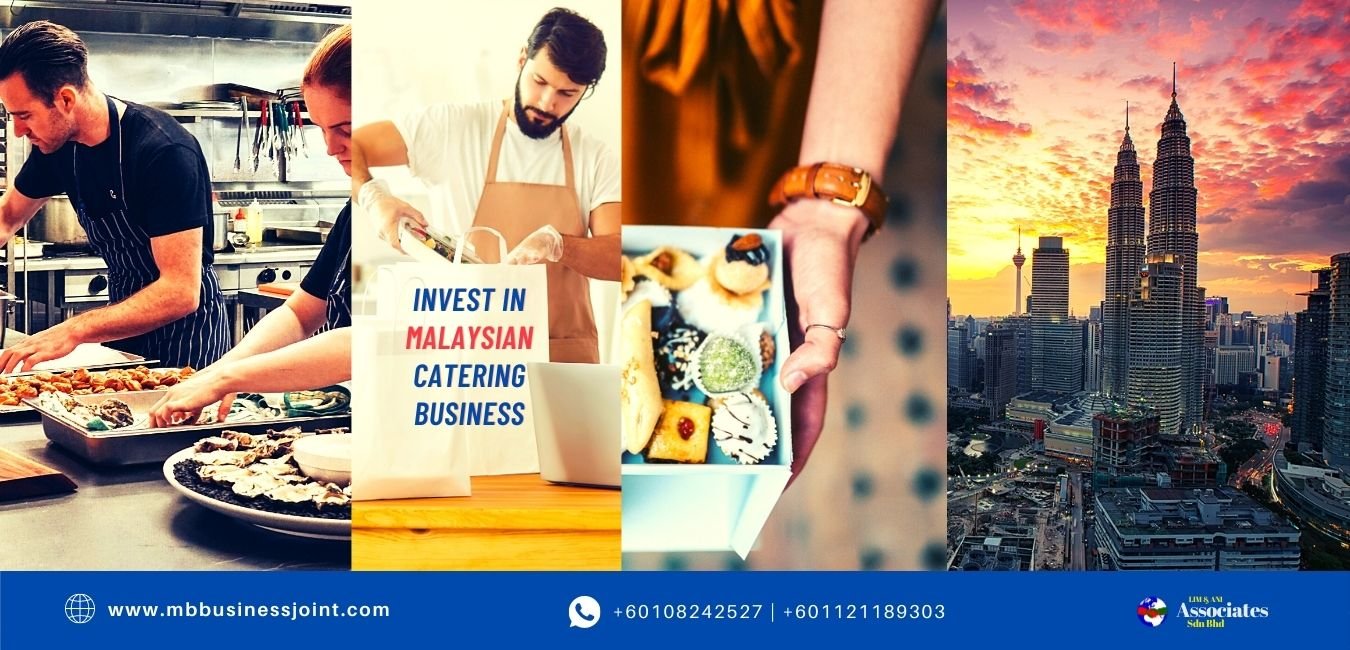
How to Start a Catering Business in Malaysia
A catering business can serve corporate clients, events, factories, institutions, schools, private functions and recurring meal programmes. But the business must be structured around food safety, premises, licensing, operations and reliable delivery from the beginning.
Company incorporation is only one part of the setup. A proper catering operation may also require MOH food-premise registration, food-handler compliance, local-authority approvals, suitable premises, banking, accounting and — where commercially relevant — halal certification.
What Is a Catering Business?
A catering business prepares and supplies food for consumption away from a traditional restaurant dining environment. Depending on the model, food may be produced in a commercial kitchen, central kitchen, approved food premise or other suitable facility and delivered to customers.
Catering can be event-based, contract-based, institution-based, delivery-based or built around recurring meal programmes.
Production capacity, food safety, procurement, staffing, menu costing, delivery, customer contracts and cash-flow management are as important as the food itself.
Types of Catering Businesses in Malaysia
Registering the Malaysian Catering Company
A Malaysian Sdn. Bhd. can provide the corporate platform for a catering business to employ staff, enter contracts, maintain banking, rent premises and apply for operational approvals.
SSM currently confirms that a private company must have at least one director ordinarily resident in Malaysia by having a principal place of residence in Malaysia.
Shareholders
Determine the proposed Malaysian, foreign or joint ownership structure.
Directors
Establish the board structure and satisfy the applicable resident-director requirement.
Registered Activities
Register activities that accurately reflect catering, food preparation, delivery and other genuine operations.
Can a Foreigner Start a Catering Business in Malaysia?
Foreign investors may establish Malaysian companies, but the correct ownership and operating structure should be reviewed against the actual catering model, premises, licensing requirements and any applicable sector conditions.
The company structure should therefore be planned together with the operational requirements rather than assuming that company incorporation alone confirms every aspect of the food business.
A company may be incorporated with foreign shareholders while the catering operation itself still needs to satisfy the applicable food-premise, local-authority and sector requirements.
Catering Businesses Fall Under Malaysia’s Food Hygiene Framework
Malaysia’s Ministry of Health regulates food safety under the Food Act 1983 and the Food Hygiene Regulations 2009.
Catering premises fall within MOH’s food-premise registration framework, together with other premises involved in preparing, processing, storing or serving food for sale.
- Food-premise registration
- Food-handler training
- Food-safety controls
- Cleaning and sanitation
- Appropriate storage
- Pest-control measures
- Safe preparation procedures
- Suitable food transportation
- Applicable employee health requirements
Catering Premises Must Be Registered With the Ministry of Health
MOH currently classifies catering and mass-catering premises as P2 food premises under the Food Hygiene Regulations 2009.
Food-premise registration is carried out through the Ministry’s FoSIM system. MOH currently states that the registration is valid for three years and must be renewed when it expires.
Can You Operate a Catering Business From Home?
MOH specifically confirms that a person operating a catering business from home still falls within the food-premise registration framework.
In 2026, MOH also maintains a dedicated Home-Based Food programme covering safe food preparation from residential premises.
FoSIM
The premises should satisfy the applicable MOH food-premise registration requirements.
Training
MOH’s current Home-Based Food framework requires recognised food-handler training documentation.
Anti-Typhoid
MOH’s 2026 Home-Based Food documentation includes anti-typhoid vaccination evidence.
Food Controls
Home preparation must still be organised around safe handling, storage, packaging and distribution.
Food-Handler Training Is Mandatory
MOH states that the Food Hygiene Regulations 2009 require food handlers to undergo food-handler training through schools recognised by the Ministry of Health.
Catering operators should therefore build staff compliance into recruitment and onboarding rather than addressing it only after an inspection or client request.
Choosing the Catering Premises
The kitchen should be selected according to production capacity, food-safety requirements, delivery access and the licensing conditions applying to the actual municipality.
Food Preparation
Sufficient working space and separation for safe preparation.
Cold Storage
Suitable chilled and frozen storage based on the menu and production volume.
Ventilation
Suitable ventilation and extraction where required for the cooking operation.
Water & Washing
Appropriate washing, sanitation and potable-water arrangements.
Waste Control
Proper food-waste, refuse and pest-control arrangements.
Dispatch
Practical loading and delivery access for outgoing food orders.
Business & Premises Licensing Depends on Location
Malaysia does not use one universal local-authority catering licence applicable to every city.
MalaysiaBiz’s licensing search requires the actual business activity together with the state and city or district because licensing requirements can differ by location.
A commercially attractive unit is not automatically suitable for the intended catering operation. Premises use, local licensing, signage, kitchen works and other location-specific requirements should be checked first.
Is Halal Certification Mandatory?
JAKIM confirms that Malaysian Halal Certification remains voluntary at the national level.
That does not make halal irrelevant. Certification can become commercially important where customers, procurement contracts, institutional buyers or other commercial requirements expect recognised halal certification.
If halal certification is part of the business model, sourcing, preparation, storage, handling, premises and internal controls should be planned around the applicable certification requirements from the beginning.
Halal, Non-Halal or Mixed Operations
The catering concept should determine early whether it intends to pursue Malaysian Halal Certification, operate as a non-halal business, or maintain another clearly structured operating model.
Certification-Oriented Model
Structure sourcing, kitchen controls and internal procedures around the applicable halal standards where certification is intended.
Defined Market Position
Operate transparently within the applicable food, business and local-authority framework.
Where halal and non-halal operations are contemplated, premises, sourcing, segregation, handling and any intended certification requirements should be reviewed before the operating model is finalised.
MOH Trust MyCatering Certification
MOH maintains the Trust MyCatering programme to help catering operators strengthen food-safety standards and public confidence.
MOH published updated Trust MyCatering guidance for small and medium catering operators in 2026.
Trust MyCatering should be assessed according to the current MOH programme criteria and the commercial needs of the business.
Corporate and Government Catering May Have Additional Requirements
Large corporate, institutional and government food-supply opportunities can impose contractual requirements beyond basic company registration.
MOH is currently implementing food-safety certification initiatives connected with government food procurement in selected areas and ministries, so tender requirements should always be checked against the specific procurement.
Schools, factories, healthcare facilities, ministries, private corporations and event customers can impose different food-safety, insurance, certification and contract conditions.
Catering Revenue Models
Corporate Catering
Offices, meetings, employee meal programmes and recurring corporate events.
Contract Catering
Schools, factories, facilities and other institutional clients.
Wedding & Event Catering
One-off or recurring private and commercial events.
Meal Plans
Recurring consumer or corporate meal packages.
Delivery-Based Catering
Online ordering, scheduled delivery and central-kitchen fulfilment.
Specialised Catering
Dietary, cultural, premium or sector-focused food services.
How Much Does It Cost to Start a Catering Business?
There is no credible universal startup amount for a Malaysian catering business. Cost depends on the premises, kitchen size, equipment, production capacity, licences, staff, vehicles, menu and working-capital requirements.
The previous version of this article published fixed startup, margin and break-even estimates. Those figures have been removed because they were not reliable enough to use as universal benchmarks.
Company Setup
Incorporation, statutory administration and professional setup costs.
Premises
Rental deposit, renovation, extraction, utilities and fit-out.
Kitchen Equipment
Cooking systems, refrigeration, cold storage and preparation equipment.
Compliance
Applicable registrations, licences, training and certifications.
People
Kitchen staff, food handlers, operations, administration and delivery personnel.
Working Capital
Ingredients, payroll, rent, utilities and operating expenses before customer receipts stabilise.
Profitability Depends on the Actual Operating Model
Generic gross-margin, net-margin and break-even claims should not be used to evaluate a catering business.
Commercial performance depends on menu pricing, food cost, wastage, labour, delivery cost, kitchen utilisation, contract terms and payment cycles.
Recurring Contracts Can Improve Revenue Visibility
A catering company with recurring customers may find production and staffing easier to forecast than a business relying entirely on one-off events.
Corporate Lunches
Recurring employee meal programmes and office catering.
Factory Meals
Scheduled high-volume meal supply where contract requirements are satisfied.
Institutional Supply
Schools, facilities and other organisations subject to relevant procurement requirements.
Prepare the Company for Bank Onboarding
A bank-ready catering company should be able to explain its ownership, business model, premises, customers, funding and expected transaction profile.
Company Ownership Does Not Automatically Grant the Right to Work in Malaysia
A foreign shareholder or director who intends to work actively in the Malaysian business should assess the appropriate immigration pathway separately from company incorporation.
Where ESD or Employment Pass planning is relevant, the company should be structured around genuine operations, appropriate capital, premises, staffing and the requirements applicable to the intended route.
How to Start a Catering Business in Malaysia
Decide the menu, customer segment, production model and delivery method.
Estimate premises, kitchen, equipment, staffing and working-capital needs.
Determine shareholders, directors, business activities and funding.
Establish the Malaysian operating company where appropriate.
Review local licensing and food-operation suitability before committing to the location.
Complete the applicable MOH FoSIM food-premise registration.
Complete applicable recognised training and staff health requirements.
Address the applicable local-authority and premises requirements.
Determine whether recognised halal certification forms part of the business model.
Begin operations with proper food-safety, accounting and commercial controls.
Catering Business Mistakes to Avoid
Signing the Premises Too Early
Check business and food-operation suitability before committing to a long lease.
Ignoring FoSIM Registration
Catering premises fall within MOH’s food-premise registration framework.
Untrained Food Handlers
Food-handler compliance should be built into staff onboarding.
Assuming Halal Is Automatically Mandatory
Determine the real certification, customer and procurement requirements.
Using Generic ROI Claims
Model profitability from the actual menu, contracts, labour and cost structure.
Weak Cash-Flow Planning
Customers may pay after delivery while ingredients, rent and wages are paid earlier.
Catering & Food Business Setup Advisory
We assist Malaysian and foreign founders with the corporate and operational coordination required to establish a catering business in Malaysia.
Continue Your Malaysia Food & Business Research
Malaysia Business Setup
Understand the complete company, banking, licensing and operations pathway.
Business Setup Guide →Business Licence Malaysia
Understand Malaysia’s activity- and location-based licensing framework.
Licensing Guide →Foreign Company Registration
Understand Malaysian incorporation for foreign shareholders.
Foreign Founder Guide →Planning to Start a Catering Business in Malaysia?
Tell us your nationality, proposed catering model, location, ownership structure, whether you intend halal certification and whether you require corporate banking or foreign-founder planning.